
Dr. Ryan Flynn's latest publication advances his groundbreaking exploration of cell surface biology, uncovering new insights into the molecular interactions that help regulate cellular communication and function
Heparan sulfate proteoglycans (HSPGs) have been recognized as key plasma membrane-tethered co-receptors for a broad range of growth factors and cytokines containing cationic heparan-binding domains. However, how HSPGs mechanistically mediate signaling at the cell surface—particularly in the context of cell surface RNA—remain poorly understood.
During developmental and disease processes, vascular endothelial growth factor (VEGF-A), a heparan sulfate-binding factor, regulates endothelial cell growth and angiogenesis. The regulatory paradigm for endothelial cell-mediated selectively of VEGF-A binding and activity has largely been focused on understanding the selective sulfation of the anionic heparan sulfate chains. Here we examine the organizational rules of a new class of anionic cell surface conjugates, glycoRNAs, and cell surface RNA-binding proteins (csRBPs).
Leveraging genome-scale knockout screens, we discovered that heparan sulfate biosynthesis and specifically the 6-O-sulfated forms of heparan sulfate chains are critical for the assembly of clusters of glycoRNAs and csRBPs (cell surface ribonucleoproteins (csRNPs)). Mechanistically, we show that these clusters antagonize heparan sulfate-mediated activation of ERK signaling downstream of VEGF-A. We demonstrate that the heparan sulfate-binding domain of VEGF-A165 is responsible for binding RNA, and that disrupting this interaction enhances ERK signaling and impairs vascular development both in vitro and in vivo and is conserved across species. Our study thus uncovers a previously unrecognized regulatory axis by which csRNPs negatively modulate heparan sulfate-mediated signaling in the context of angiogenesis driven by VEGF-A.
 Read the full Nature Communications article: GlycoRNA complexed with heparan sulfate regulates VEGF-A signalling

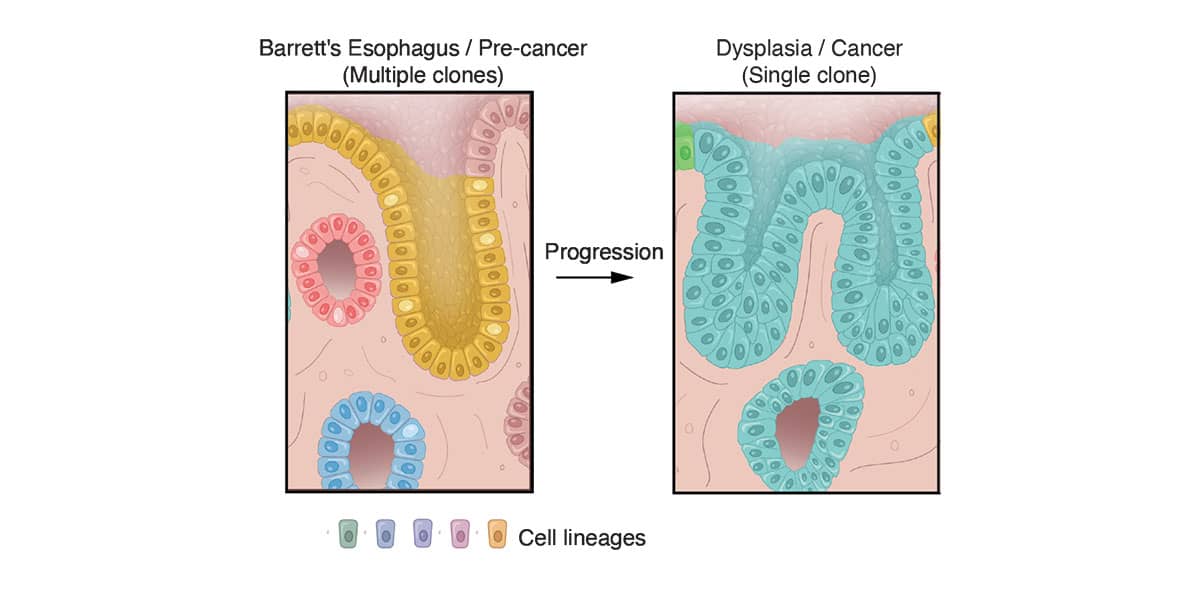
Sydney Shaffer, MD, PhD published findings on the origins and progression of esophageal cancer at the single cell level
Clonal cell states link gastroesophageal junction tissues with metaplasia and cancer.
Abstract
Barrett’s esophagus is a common type of metaplasia and a precursor of esophageal adenocarcinoma. However, the cell states and lineage connections underlying the origin, maintenance, and progression of Barrett’s esophagus have not been resolved in humans. Here, we perform single-cell lineage tracing and transcriptional profiling of patient cells isolated from metaplastic and healthy tissue. Our analysis unexpectedly reveals evidence for lineages spanning squamous esophagus, gastric cardia, and transitional basal cells at the tissue junction. We also identify lineages connecting Barrett’s esophagus to both esophageal and gastric tissues. Barrett’s esophagus biopsies consist of multiple distinct clones, with lineages that contain all progenitor and differentiated cell types. We discover Barrett’s esophagus cell types, including tuft, ciliated, and BEST4+ cells, which we validate through both lineage relationships and spatial transcriptomics. In contrast, the precancerous dysplastic lesions show expansion from a single molecularly aberrant Barrett’s esophagus clone. Together, these findings provide a single-cell view of the cell dynamics of Barrett’s esophagus, linking cell states along the disease trajectory, from its origin to cancer.
Read the full Nature Communications article: Clonal cell states link gastroesophageal junction tissues with metaplasia and cancer
Dr. Christopher Maher presented his research findings on 5-hydroxymethylcytosine as a liquid biopsy biomarker in colorectal cancer at the Cancer Genomics Consortium Annual Meeting in Houston Texas
The Cancer Genomics Consortium (CGC) 2025 Annual Meeting brought together the global clinical genomics community August 3–6 in Houston, Texas, with both in-person and virtual participation. The program featured keynote speakers, scientific sessions, abstract presentations, workshops, and networking opportunities—highlighting the latest advances in genomics and their impact on precision medicine and patient care.
Find out more about the meeting at Cancer Genomics Consortium's website: CGC 2025 Annual Meeting
Jaehyuk Choi, M.D., Ph.D recruited as the inaugural Director of the Center for Cellular Therapies and Cancer Immunology in the Harold C. Simmons Comprehensive Cancer Center at UT Southwestern
Center Times Plus highlights Dr. Jaehyuk Choi’s appointment to lead UT Southwestern’s new Center for Cellular Therapies and Cancer Immunology, where his research aims to translate cutting-edge discoveries into new hope for cancer patients.
Jaehyuk Choi, M.D., Ph.D., a physician-scientist whose discoveries have transformed the field of cancer immunology, has begun his new role as the inaugural Director of the Center for Cellular Therapies and Cancer Immunology in the Harold C. Simmons Comprehensive Cancer Center at UT Southwestern. He also serves as Vice Chair for Translational Research and Innovation in the Department of Dermatology.
Dr. Choi came to UTSW from the Feinberg School of Medicine – Northwestern University, where he was Associate Professor in the Departments of Dermatology, Biochemistry, and Molecular Genetics. His research utilizes genomic and computational approaches to elucidate the molecular and cellular defects in cancer and autoimmune disease. Dr. Choi’s recent discoveries into the superpowers acquired by T cells in T-cell lymphomas could lead to enhanced cellular therapies for solid tumors – “living drugs” that could offer new hope for patients with currently incurable cancers.
This new Center at UTSW will house a multidisciplinary program with an initial focus on solid tumors. As its Director, Dr. Choi will identify new lead candidates for cell therapies developed in his laboratory or by others at UT Southwestern that would provide the basis for first-in-human clinical trials in solid tumors. He will also develop collaborative initiatives between laboratory-based researchers and clinical investigators, particularly in the Department of Dermatology.
After completing undergraduate studies in biochemistry at Harvard University, Dr. Choi earned his medical degree and Ph.D. in immunobiology from Yale University School of Medicine. He then completed an internship in internal medicine, a residency in dermatology, and a fellowship in genetics research before securing his first faculty position, all at Yale.
Dr. Choi has been recognized with honors that include a Damon Runyon Clinical Investigator Award (2016), the National Institutes of Health Director’s New Innovator Award (2017), and the Mark Foundation Emerging Leader Award (2022). He is an elected member of the American Society for Clinical Investigation and the American Dermatological Association as well as an Associate Editor for the Journal of Clinical Investigation.
Center Times Plus spoke with Dr. Choi about his background, research, and vision for the future.
Why open this Center now?
When I was in medical school in the late 1990s, researchers thought that the immune system could fight only some small, specific subsets of cancer. But that changed completely over the next decade with the development of biologic antibodies that could target proteins on immune cell surfaces. These antibody drugs, which started getting approved by the Food and Drug Administration in 2011, can cure patients with otherwise fatal cancers. We now know that cancer cannot be explained without understanding how it interacts with the immune system. We think most patients’ immune systems can recognize cancer but aren’t strong enough to kill it. Our goal at the new Center is to enhance immune cells so they can selectively kill cancer cells while being strong enough to withstand cancer’s defenses, creating not only a cure but long-lived immunity against cancer.
What are your greatest scientific accomplishments?
One of our most important discoveries focuses on chimeric antigen receptor (CAR)-T cells, a treatment in which a patient’s own immune cells are engineered in a lab to fight their specific cancers. This therapy has had great success in treating blood and bone marrow cancers but not solid tumor cancers, which comprise 90% of cancers. The defenses that solid tumors put in place exhaust CAR-T cells so that they aren’t able to attack these cancers effectively. Over the past several years, my colleagues and I studied mutations in T-cell lymphomas – cancers that originate in T cells – looking for those that might strengthen CAR-T cells against solid tumors. Last year, we reported a mutation that made CAR-T cells 100 times stronger at fighting tumors, including skin, lung, and stomach tumors in mice.
What are you hoping this research will provide to patients?
We’d like to translate this finding into first-in-human clinical trials at UT Southwestern. The bottom line is that I want to give patients hope. Nearly everyone has been affected by cancer in loved ones. It affects all of us – from kids to the elderly. It’s an incredibly emotional diagnosis, and one associated with a potentially tough road just getting through treatment. I think about patients who are told that their disease is not curable, and I want to give them a possibility to change that by developing new medicines. It’s a dream come true to be able to do this at UT Southwestern.
Read the full Center Times Plus article: Choi recruited to lead new Center for Cellular Therapies and Cancer Immunology
Mark Yarmarkovich, Ph.D, named one of six awardees of the 2025 Pershing Square Sohn Cancer Prize by the Pershing Square Sosh Cancer Research Alliance
The Pershing Square reports that six early-career scientists have been awarded the 2025 Pershing Square Sohn Cancer Prize, receiving $750,000 each to pursue bold cancer research projects with the potential to drive future breakthroughs.
THE PERSHING SQUARE SOHN CANCER PRIZE AWARDED TO SIX PIONEERS IN CANCER RESEARCH
The Pershing Square Foundation Has Committed More Than $49 Million to 77 Scientists in the Greater New York Area to Support High-Risk, High-Reward Cancer Research
NEW YORK, MAY 20, 2025 (BUSINESS WIRE)----The Pershing Square Sohn Cancer Research Alliance today announced the six winners of the 2025 Pershing Square Sohn Cancer Prize, awarded annually to cancer research scientists and physician-scientists based in the greater New York City area. The Prize, totaling $4.5 million distributed in $750,000 grants to each winner, empowers investigators early in their independent careers to pursue their most exciting research projects at a critical stage when traditional funding is lacking.
Over the past twelve years, the Alliance has awarded over $49 million to 77 scientists at 14 institutions in New York, New Jersey, Connecticut, and Pennsylvania. With this funding, the recipients will contribute to the greater New York City area’s growing biomedical research hub. In addition to funding, the Alliance provides Prize winners with opportunities to present their work to scientific and business audiences to encourage collaboration and help bridge the gap between academia and industry.
“We are thrilled to partner with the six extraordinary recipients of this year’s Pershing Square Sohn Prize,” said Bill Ackman, Co-Trustee of The Pershing Square Foundation and CEO of Pershing Square. “The Prize empowers visionary scientists to pursue bold, unconventional ideas that have the potential to transform our understanding and treatment of cancer. It is an honor to support them at such a pivotal stage in their careers, and we look forward to the breakthroughs their research will bring.”
The winners of the 2025 Pershing Square Sohn Cancer Prize are:
- Chrysothemis Brown, MD, PhD, Memorial Sloan Kettering Cancer Center: Dr. Brown previously identified Thetis cells as a novel immune cell type that may play a key role in limiting the effectiveness of immunotherapy in the gut. This project will explore the roles of Thetis cells and dendritic cells in regulating immunity and tolerance in colorectal cancer.
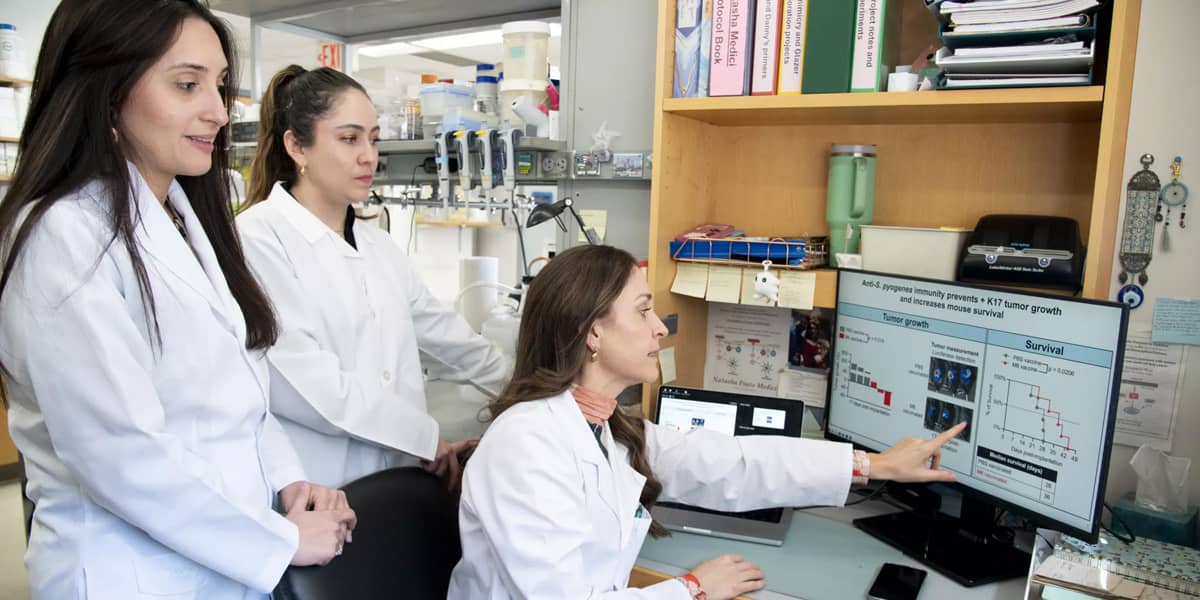
- Luisa Escobar-Hoyos, PhD, Yale School of Medicine: The lab of Dr. Escobar-Hoyos is developing a novel pancreatic cancer vaccine that harnesses the body’s existing immunity to strep bacteria to target and destroy pancreatic tumors. Her Prize-funded research will investigate the mechanism behind this immune response and evaluate the vaccine’s effectiveness, potentially leading to a new therapeutic strategy against this deadly cancer.
- Alexander Gitlin, MD, PhD, Memorial Sloan Kettering Cancer Center: Physician-scientist Dr. Gitlin investigates the connection between inflammation and cancer. His research focuses on the role of tumor necrosis factor (TNF) signaling and the cell death protease Caspase-8 in colonic inflammation and tumorigenesis. This work aims to reveal how TNF functions across different cell types to either maintain tissue homeostasis or promote malignancy.
- Ed Reznik, PhD, Memorial Sloan Kettering Cancer Center: Dr. Reznik and his team are using computational approaches to study cachexia—a debilitating syndrome characterized by muscle and fat wasting that affects over 50% of cancer patients, significantly reducing quality of life and tolerance to treatment. His research will integrate tumor sequencing and serological data with physiological metrics derived from radiologic imaging, enabling population-scale analyses to better predict which patients will develop cachexia.
- Liling Wan, PhD, Perelman School of Medicine at the University of Pennsylvania: The Wan lab is investigating transcriptional condensates—membrane-less assemblies that concentrate transcriptional machinery at specific locations in the genome to regulate gene expression. Her project aims to uncover how cancer cells hijack these condensates to reshape 3D genome organization and control gene activity in ways that promote tumor development.
- Mark Yarmarkovich, PhD, NYU Grossman School of Medicine: Dr. Yarmarkovich pioneered peptide-centric chimeric antigen receptors (PC-CARs), an immunotherapy approach to target the essential genes that drive tumor growth. In this project, the Yarmarkovich lab will systematically map all potential CAR targets arising from critical driver genes across cancer types and develop a library containing hundreds of new PC-CARs against these cancer drivers.
“It is truly inspiring to witness the brilliance and imagination driving the next generation of cancer research. The Pershing Square Sohn Cancer Prize honors not just innovation, but the vision and courage of scientists willing to challenge the status quo,” said Olivia Tournay Flatto, PhD, Co-Founder and Executive Director of the Pershing Square Sohn Cancer Research Alliance and President of The Pershing Square Foundation. "Their groundbreaking ideas come to life thanks to the foresight of our scientific advisors and the leadership of philanthropists who share an unwavering commitment to conquering cancer and saving lives.”
“The work to find new treatments and cures for cancer continues to be an urgent global health priority so we are heartened by the research approaches of this year’s Prize winners,” said Evan Sohn, Vice President of the Sohn Conference Foundation. “We are confident that with the passion, creativity, and insights we’ve seen from this group of scientists, they will make discoveries that will have a lasting impact for the patients for whom our Foundation fights.”
As part of the selection process, the Pershing Square Sohn Cancer Research Alliance relied on and benefitted from the guidance of highly accomplished advisory and scientific review boards.
Prize Advisory Board members include:
- Jeanne B. Ackman, MD, Radiologist, Massachusetts General Hospital, and Assistant Professor, Harvard Medical School
- Mikael Dolsten, MD, PhD, Former Chief Scientific Officer and President, Worldwide Research, Development, and Medical, Pfizer, Inc.
- Allan Goodman, PhD, President Emeritus, The Institute of International Education
- Pablo Legorreta, Founder and Chief Executive Officer, Royalty Pharma
- Richard P. Lifton, MD, PhD, President, The Rockefeller University
- Tom Maniatis, PhD, Evnin Family Scientific Director & CEO, Board Member, New York Genome Center; Isidore S. Edelman Professor of Biochemistry & Molecular Biophysics, Columbia University
- Siddhartha Mukherjee, MD, PhD, Assistant Professor, Department of Medicine, Division of Oncology, Columbia University Medical Center, and Author of The Emperor of All Maladies: A Biography of Cancer and The Gene: An Intimate History
- James E. Rothman, PhD, Sterling Professor of Cell Biology and Professor of Chemistry, Yale University and 2013 Nobel Prize Winner in Physiology or Medicine
- Bruce Stillman, PhD, President and Chief Executive Officer, Cold Spring Harbor Laboratory
- Craig Thompson, MD, Former President and Chief Executive Officer, Memorial Sloan Kettering Cancer Center
- George D. Yancopoulos, MD, PhD, President and Chief Scientific Officer, Regeneron
Additional details about the Prize winners can be found on the PSSCRA website at https://psscra.org/.
About the Pershing Square Sohn Cancer Research Alliance
The Pershing Square Sohn Cancer Research Alliance was formed in 2013 by The Pershing Square Foundation, which has since committed more than $49 million to 77 scientists, in partnership with The Sohn Conference Foundation. The Alliance is dedicated to playing a catalytic role in accelerating cures for cancer by supporting innovative cancer research and by facilitating collaborations between academia and industry. Annually, the Alliance awards The Pershing Square Sohn Cancer Prize, which provides early-career, greater New York area-based scientists the freedom to take risks and pursue their boldest research at a stage when traditional funding is lacking. For more information, visit http://psscra.org/.
Contact:
Read the full The Pershing Square article: The Pershing Square Sohn Cancer Prize Awarded to Six Pioneers in Cancer Research